The EU Packaging and Packaging Waste Regulation, PPWR for short, has applied since 12 August 2026. It gradually replaces the previous national rules and applies directly in all EU member states. Many requirements only take effect over the next few years, but some already affect you as an online seller today. Here is an overview of what applies and what you should prepare now.
What has applied since August
Regulation (EU) 2025/40 entered into force in February 2025 and has applied since 12 August 2026. Packaging you place on the market in the EU must now meet the requirements that are already in effect.
For sellers in Germany, one thing in particular has changed: for private labels and for imported goods without an intermediary in Germany, the obligation to register packaging with a dual system (the German packaging compliance scheme) now lies with the retailer. According to the German Central Agency Packaging Register (Zentrale Stelle Verpackungsregister), there is no transition period. The obligation must be met before the goods are sold.
- Check whether your shipping and product packaging is registered with a dual system.
- Report your packaging quantities completely and correctly.
- For imported goods, clarify who in the supply chain takes on which obligation.
Which deadlines are still to come
The most important next steps for mail-order retail at a glance:
- From 12 August 2028: Harmonised labelling of packaging with pictograms showing the material composition. This explicitly also applies to shipping packaging in online retail. The exact start depends on when the EU sets out the details.
- From 1 January 2030: Shipping and transport packaging may have no more than 50% empty space. Here, too, the start may be postponed if the calculation method is set later.
- From 1 January 2030: Only packaging that is readily recyclable may be placed on the market.
Empty space: the point that is decided at the packing table
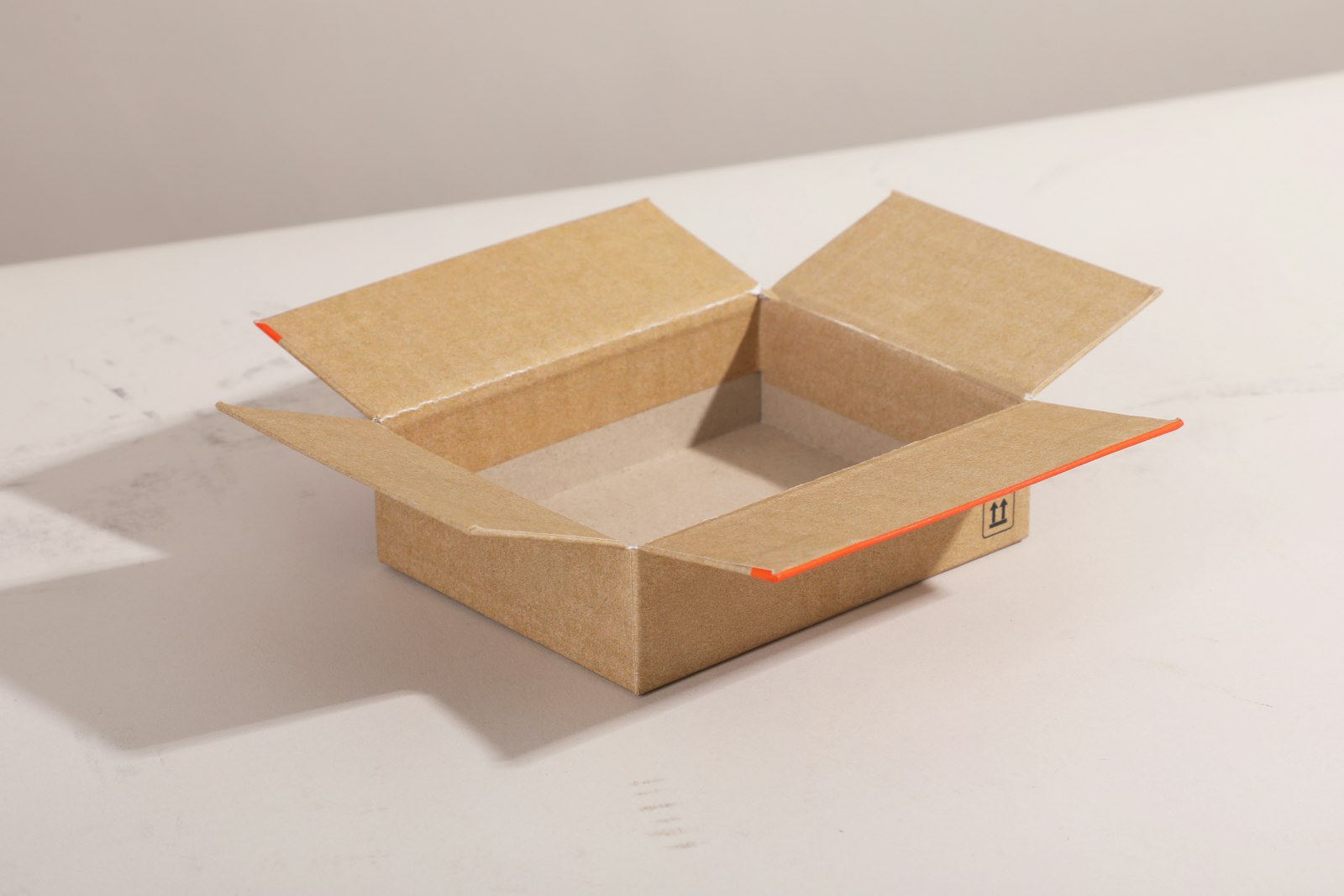
The 50% limit for empty space sounds far off, but it affects every parcel. Important: void fill such as paper padding or air cushions counts as empty space in the calculation. So a carton that is too big doesn’t get any better by filling it up.
Choosing the right carton sizes pays off for more than just the regulation, though. It saves material, void fill and volume in transport – and often time at the packing table too.
What you can prepare now
- Maintain your product data: Record the dimensions, weight and fragility of every item. Without this data, it isn’t possible to choose a suitable carton.
- Review your carton range: Look at which carton sizes you use and which orders end up with a lot of air in the parcel.
- Reduce void fill: Where a lot of void fill is regularly needed, the carton often isn’t the right one.
- Know your materials: If you know what your packaging is made of, you’re prepared for the labelling and recycling requirements.
- Clarify responsibilities: If you work with a fulfillment provider, agree together who maintains packaging data and reports quantities.
How FulFy supports you
We pack your orders every day and see exactly where cartons are too big or too much void fill ends up in the parcel. If you want to get your shipping ready for the new rules, let’s take a look at your cartons and packaging material together.
Note: This article gives an overview as of October 2026 and does not replace legal advice. Individual deadlines may still change.